Showing posts with label hippos. Show all posts

Tuesday, March 28, 2023

Heaven on earth

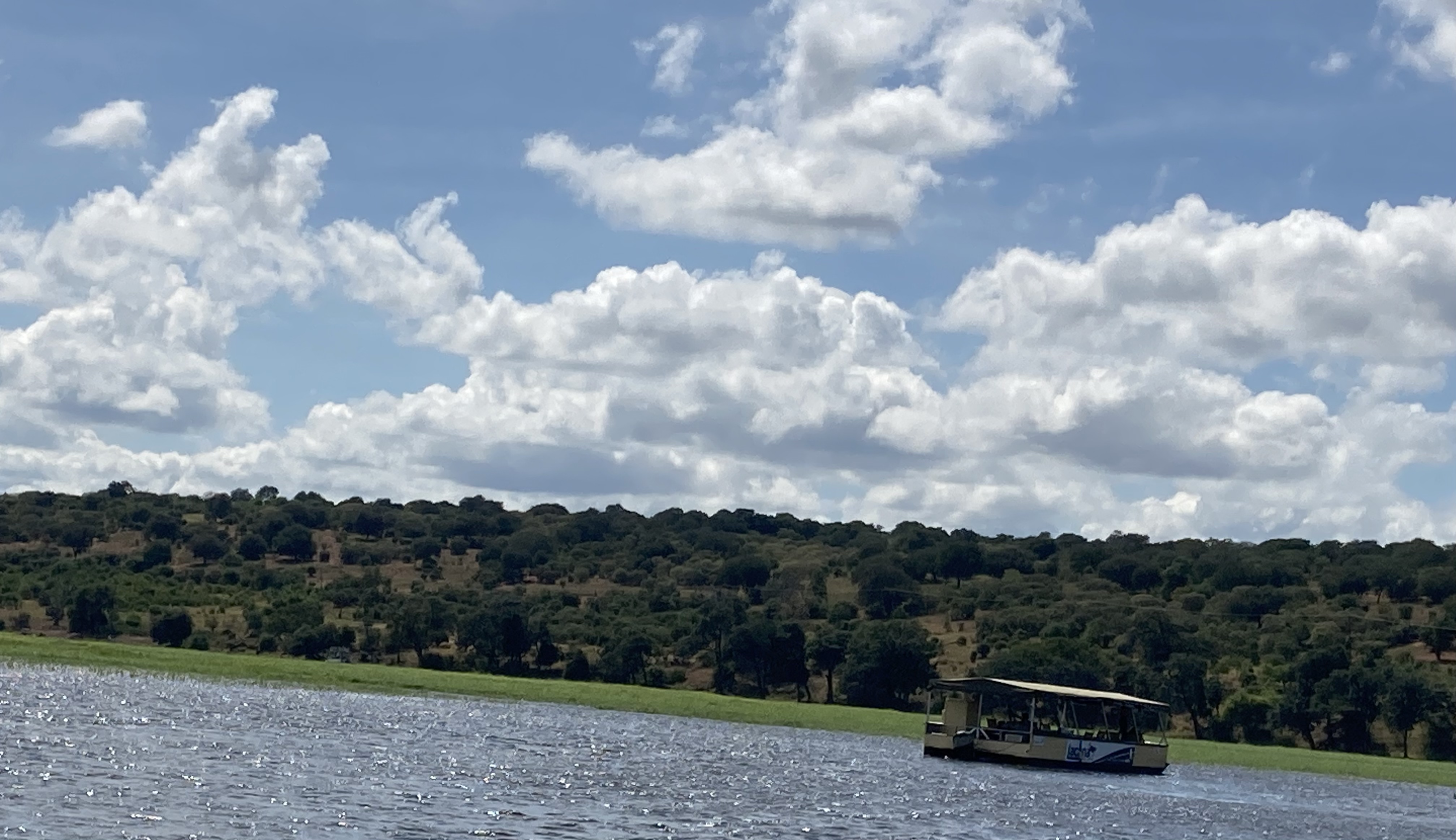
  I think I finally found the Garden of Eden. 

It’s on the Chobe river in Botswana.

 Omg, what beauty!

The river starts in Angola, separates Namibia from Botswana, flows into the Zambezi River which cascades over Victoria Falls then empties into the Indian Ocean. 

I tell you I have never felt greater peace and tranquility than during the few hours I spent meandering up and down the exotic River at the National Park in Botswana, looking at the animals in their natural habitat.

Hippos cooling off

There are hundreds of species of birds and exotic animals around and soldiers on patrol to deter poachers.

Here we saw a slew of hippos, baboons, wart hogs, elephants, buffalo etc. 

Even the crocs seemed at peace while different types of fleet-footed antelopes grazed on the banks, always on the look out for dangerous predators.

If this is not the best that nature has to offer, please tell me where. 

I now understand why the white man has been trying for centuries to steal African land!

We had taken a one day safari in the Chobe National Park in Botswana from Livingstone, Zambia.

 To get to  Chobe is around an hour drive on good roads,  through Mosi-park-Tunya National park, (which is where you find Africa’s greatest world wonder, Victoria Falls, on the Zambezi river. This river separates Zambia from Zimbabwe.)

At this bridge, you have 4 borders ; Zimbabwe, Zambia, Botswana, Namibia.

The Chobe Park is a UNESCO world heritage site. 

Our guide/driver was one of the most focused young men I have ever met, so  I have to do a separate blog about him!


His name is Mwangelwa. (Pronounce it nuh😊)

Remember how careless and unthinking you were at 21?

Not him!

He is a great asset to Cherish Travel and Tours which organized this safari.

Botswana and Zambia share one building for immigration purposes so you just walk from one side of the huge hall to the other, for entry and exit. 

I loved that.

Botswana is one of the most progressive and well run democracies on the continent. It has less than 3 million people and according to a BBC study, “Botswana is “one of the world’s six best countries to live in”.

Their currency is the Pula and unlike Zambia which has strict currency control, you seem to be able to take in and bring out as much as you want.

Zambia’s border is full of signs warning you not to take in or leave with more than 5000 Kwacha.

You don’t learn much about a country in a day, but I was impressed Botswana’s attention to detail.

For example, wherever you drive, there are huge posters encouraging consumer awareness and civic pride.

Protection of their peoples health is of primary importance too, so before you enter their country, you must sanitize your feet! 

Motorists must drive through this sanitized trench to make sure the vehicle’s tires were also treated..

This our guide said was imposed when they had a breakout of ‘foot and mouth disease ‘ some years ago , but it became a permanent feature. 


Yup, lots of countries could learn Link;a lot from Botswana. 

Me, I just saw beauty all around.

Our safari had two components. First on the Chobe River which separates Namibia from Botswana.

Afterwards, we had a great lunch before starting the land tour through the Park.


This safari is by far the best value for money I have ever experienced anywhere.  Link; https://youtu.be/UeNtc_zDrq0


L to right: Some of our group: from Ireland, Tanzania, Latvia, USA.


The black and white bird is called ‘sacred ibis’


A hotel on the Namibia side


We didn’t see any zebras in the park, but when we returned to Zambia and drove into a hotel to use an ATM machine, these were wondering peacefully around.


And, we saw no lions either although we did see this lone buffalo with a huge wound just above his right leg  and the guide said it looked like he had survived a lion attack.

We did however have the great experience of taking cubs for a ‘walk in the park’ and as long as we stayed behind them, we would not be considered prey, the trainer said.

We did and we weren’t. 😊


That’s why we are still here😂😂

Monday, May 24, 2021

AN UNFORGETABLE SAFARI

I have never been on an African safari before. However,  I am willing to bet that I will never have an experience equal to what I  am about to share with you.

In April 2021, a safari was organized by a Kenyan Travel Writer named Rupi, who is a friend of my wonderful hosts Kelly and Denis.

Heading out into the wild

Before 2020, I had never really had any interest in visiting Kenya. For, it wasn't one of the African countries from which slaves were kidnapped and brought to Jamaica. So it never featured in any stories  told by any our ancestors.

Nevertheless, when my friends Kelly and Denis were posted there and begun to share photos of the wonderful flora and fauna in that country, I fell in love instantly. 

Despite the pandemic raging everywhere, I had to take advantage of the opportunity to join Rupi's safari when I heard about it and its a blessing I did.

Our one bedroom fully-equipped tent
The reception area
We were booked to spend four days at the Amboseli Porini camp in the Selenkay Conservancy. It borders Amboseli National Park. 

To get there we travelled on  excellent highways from Nairobi, with signs pointing out how close we were getting to Tanzania. Then our very experienced driver swerved off into the bushes, where only special four wheel drive vehicles dare to tread.

After about a twenty kilometer ride off-road, we arrived at the camp. But it was much better than I expected. For in my days of camping, it had been a simple tent with sleeping bags and everything outside.  

The reception area here was very welcoming and our tent had two large beds, inside plumbing and electricity. 

Solar power of course.

The Vervet Monkey aka blue balls monkey

We were met by the nicest young men, who were quick to assure us that everything we wanted would be available including sumptuous international dishes. Three meals per day too.


The bush bar
We settled in, had some refreshments, then they asked if we wished a mini- introduction to some animals in the conservatory.


The observation deck
Wild horses couldn't stop me,  for already I had become hyped-up, seeing cute monkeys playfully scampering around our compound.


 Unfortunately, they were very scared of humans as they were not at all accommodated in the camp, due to their penchant for stealing everything in sight!

 I was told that this was a common breed known as Vervet or blue balls monkey.

It took me about two days to find one that would expose those balls, so I could get the evidence that they were really blue!😎

That afternoon, we boarded the safari vehicle for a trip out into the wild with an adequate supply of liquor to calm our spirits at the bush bar. We were taken to a platform not far from the camp, which overlooked a water hole. 

Michael, standing in the shadow of the snow-covered Mount Kilimanjaro

We were informed that the animals came there when they were thirsty or simply wanted to frolic  around in the cool mud. 

As we waited for some to appear, someone pointed excitedly to the distant bushes, behind which he said he saw elephants that were coming our way. Full of excitement we all peeled our eyes in that direction. But no elephants emerged. 

Minutes later, the guide said there was a huge elephant behind us! It was then we learnt that though monstrous, these massive creatures move around silently because they walk on tiptoes.

Nothing I have ever experienced came close to preparing me for that grand elephant with tusks almost touching the ground. 

 Our guides said his name was Michael and he was around 30 years old .

Michael hanging out with antelopes at bedtime. (a Michelle Wright photo)

Totally ignoring us, he headed straight  to the water hole. There he played around, spraying water all over his body with his trunk and rolling in the mud. We kept our eyes pasted on him to ensure that we missed nothing. 

About half an our later, almost  a dozen other elephants marched in single file to the water hole. Not knowing what to expect, we waited with bated breath to see how this huge occupant would react to the crowd. But they must have been family, for as they arrived, they immediately started mingling pleasantly.  

We humans could barely be contained as we watched the interactions in awe. 

I have had close encounters with elephants before, having ridden and fed them in Thailand, but believe me, nothing can beat seeing these gentle creatures in the wild.

That was when it occurred to me that it is scenes like these, which cause people to throw in their lifestyles and move back to nature to watch and study animals.
The elegant Great Crowned Crane

After that group interacted for a long while, another group of around six elephants approached the water hole, and guess what? 

The first occupants left. 

We were told by the Maasai guide that this was the protocol among elephants when others wanted to use a water hole!

We remained there till nightfall, gawking at the herds.

Would you believe though that when we finally left to return to the camp, we again ran into Michael! 

This time he was standing with a group of antelopes.

Jacana bird

He must indeed be the king of that conservatory.                                                                                     Every day during that four day safari was filled with exhilarating experiences.                                                                                                                          Waking up in the bushes to the sound of the birds and other creatures, was memorable. Even the presence of the 'go weh bird' whose quarrelsome, screeching noise, sounds exactly like its telling you to go away, could not spoil the chorus of other exotic sounds.                                                                                                                                                                 I  was especially enthralled by the tale of the female  Jacana bird. She  has sex with male birds, lays the eggs then moves on to the next male while the previous mate is left to incubate the eggs and raise the babies.

How like so many of  the males in the human race !😅

Posing beside a termite 'castle'
An elephant feeds behind our tent

We were also introduced to the elegant, endangered, Great Crowned Crane, which incidentally is the National Bird of Uganda. It is so highly regarded there that it appears on their Coat of Arms. 
It lays its eggs in the swamps, feeds in the grasslands and roosts in the trees.

SO MANY BIRDS, SO LITTLE TIME.

Posing beside a termite 'castle'
I will admit to being slightly concerned at the camp once, on seeing a huge elephant feeding close to our tent.                                                                                                                                                            Fleetingly, I had visions of  a crazed elephant  charging through our tent-village as I once saw in the movies.  But no such excitement was a hand, for he continued feeding nonchalantly, totally oblivious of the vehicle were were in or the concerned occupants.                                                                                                    Other days were filled with other thrilling treks into the wild including a visit to Amboseli National Park.  

Traveling there,  we constantly had the exotic Mount Kilimanjaro  in sight. It is located in Tanzania, around 70 kilometers from where we were staying. As we drove along, its snow covered peak shimmered in the sunlight, appearing to take on every iridescent color in the universe from all angles.

I was also introduced to the most humungous termite nests I have every seen anywhere. In fact, some looked like they had been architecturally designed.

 I went close to one, but being allergic to reptiles, it was with some trepidation. For I was warned that these were a hangout for the large  Monitor Lizard. Some of
my friends on the safari, saw one atop a termite hill but thank heavens I missed that one! 

Amboseli park, with its beautiful lakes teeming with flamingos, massive hippos and open spaces occupied by frisky zebras, playful elephants, wildebeests, buffalos etc. was quite busy with safari vehicles when we arrived. Most of the passengers appeared to be Kenyans, reveling in the beauty of their blessed country. 

Amboseli  National Park  seems to be a place which is visited by affluent tourists who fly into their fully equipped airport rather than abide the bumpy ride on unpaved roads through the bushes.


      As I saw the planes parked there, my mind flashed to the wicked Trump boys who had posted a picture in the newspapers, of them posing with the poor wild animal they had murdered for a photo opportunity.

 Again I celebrated the Kenyan government's efforts to protect its wildlife. For everywhere, they have  heavily armed rangers, who are licensed to detain or kill anyone who hurts their animals.

I also salute the Maasai tribe of Kenya who have made it their life's work to protect the wildlife of their country.                                                                                                                                    
During our stay at the Conservatory, we had the honor of meeting Chief Jonathan Kanka  from Tipiliti village
It is that tribe which leased 15,000 acres (6,070 hectares) of their land to the operators of the conservatory in which our camp is established.

 According to the chief, the Maasai do no eat wild animals. There is great value to the tourism industry in having the wild bests around. 

One disadvantage though, is that they now have more wild predators attacking their animals. But the conservatory does give them some compensation for that. In addition, it provides employment for their people and they also operate a gift shop there. They are paid a percentage of the earnings the camp draws in from visitors staying there.

The Massai also no longer take their cattle to feed on that land, except to eat down the grass when its getting too tall. (Tall grass allows destructive predators to sneak around unseen!)

Chief Johnathon and his aides

This agreement is not only mutually beneficial to all concerned but to us visitors from all over the world and generations to come. For watching animals enjoy their environment in the same way we are allowed to enjoy ours, is the experience of a lifetime. 


SWEET MEMORIES